
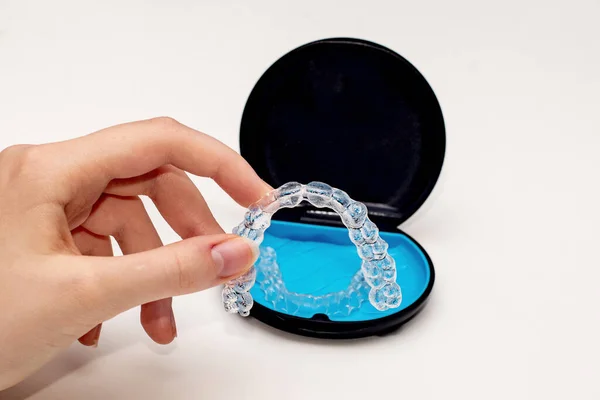
If you’ve been thinking about straightening your teeth but don’t love the idea of metal braces, clear aligners can feel like the obvious next step. When you’re working through Is Invisalign Right for You? A Complete Guide for Chaska, MN Patients, the real question becomes whether your teeth, bite, and lifestyle match what Invisalign (brand) is designed to do.
This guide explains how Invisalign works, how a treatment plan is built, what daily life is like in aligner trays, and what to expect at a consultation in Chaska, MN.
What Invisalign Is (and How It Straightens Teeth)
Invisalign is a system of clear, removable aligners that gradually move teeth using a series of custom-made aligner trays. Many patients call them clear braces, but they work differently than traditional braces because there are no fixed brackets and wires.
Invisalign straightens teeth through staged, controlled tooth movement. Each set of trays is made to apply gentle force in specific directions, so your teeth shift a little at a time.
The typical step-by-step process looks like this:
- A dentist or orthodontist designs a digital plan based on your scan and bite evaluation.
- You receive a series of aligners, each one slightly different from the last.
- You follow scheduled aligner changes, usually every 1 to 2 weeks depending on your plan.
- Your provider monitors tracking, which means checking that your teeth are matching the predicted movement.
Wear time is the make-or-break factor for results. Invisalign is removable, but it only works predictably when aligners are worn most of the day, commonly aligned with the 22-hour rule.
In West Lakes Dentistry Chaska, MN, Invisalign and other clear aligners may be provided by both a dentist and an orthodontist. The best choice depends on your case complexity, gum health, and bite alignment goals.
How Treatment Is Planned
Most Invisalign cases start with a digital scan or impressions that create a 3D model of your teeth. That model is used to map out a treatment plan and generate the full series of aligners.
For precision, your provider may recommend attachments. These are small, tooth-colored shapes bonded to certain teeth so the aligners can grip and move them more effectively.
Some plans also include IPR, which stands for interproximal reduction. Interproximal reduction is a conservative way to create tiny amounts of space between teeth, helping with crowding and improving how teeth fit together without extractions.
What the Day-to-Day Experience Feels Like
It’s normal to feel mild pressure after switching to a new set of aligners. That pressure is a sign that the trays are working, and discomfort should be manageable with basic strategies like switching at night and using dentist-approved pain relief if needed.
Because aligners are removable, you will take them out to eat and drink anything other than water. That creates new habits around oral hygiene, since brushing and flossing after meals helps prevent cavities and gum inflammation during orthodontics.
Who Is a Good Candidate in Chaska (and Who May Need Other Options)
Many teens and adults can be good candidates for adult Invisalign or teen aligners, but candidacy depends on more than how straight your teeth look. Your provider will consider tooth position, bite alignment, bone support, and your ability to follow wear time requirements.
In general, Invisalign is often well-suited for mild to moderate crowding, spacing, and certain bite concerns. It can also be a strong option for relapse, which is when teeth shift back after prior braces.
Complex cases can still sometimes be treated with aligners, but they may require braces, hybrid treatment, or specialist care. In those situations, an orthodontist may be the best fit, especially when significant bite correction is needed.
Healthy gums and stable teeth are prerequisites for predictable movement. If periodontal disease, active inflammation, or untreated cavities are present, those issues should be addressed before aligners begin.
Problems Invisalign Commonly Helps
Invisalign and other clear aligners commonly help with:
- Crooked teeth and crowded teeth
- Spacing and gaps
- Mild overbite, mild underbite, and mild crossbite
- Cosmetic alignment goals when bite function is already stable
- Relapse after traditional braces or metal braces
If your main goal is cosmetic improvement, your dentist will still evaluate function. A bite that “looks fine” can still have uneven contact that affects long-term comfort.
When Invisalign Might Not Be the Best Fit
Invisalign may not be ideal if you have:
- Severe bite discrepancies that require bigger jaw or bite changes
- Significant rotations or tooth movements that don’t track well with aligners alone
- Impacted teeth that need more complex orthodontics
- Low compliance, since wear time is essential for success
Oral health concerns also matter. Active periodontal disease or untreated decay should be treated first, and a good dental team will coordinate referrals when needed so your orthodontics starts on a stable foundation.
What to Expect at Your Invisalign Consultation in Chaska, MN
A good consultation should feel structured, calm, and clear. Most visits include a dental exam, bite evaluation, and a conversation about your goals, timeline, and options.
A typical consult flow includes:
- Review of your health history and smile concerns
- Clinical exam of teeth, gums, and bite alignment
- Digital scan and/or digital impressions to evaluate tooth position
- Discussion of candidacy, expected treatment duration, and alternatives like traditional braces
- Review of next steps, including scheduling and payment paths
For patients who feel nervous in the chair, comfort matters as much as clinical detail. Practices that emphasize comfort and anxiety-free care often build better outcomes because patients are more likely to attend visits and communicate problems early.
In Chaska, MN, some patients compare options across offices such as Chaska Dental Center, White Oak Dental, West Lakes Dentistry, Kottemann Orthodontics, and Relaxation Dentistry Chaska. A practical differentiator to look for is how clearly the team explains your treatment plan, including risks, tracking expectations, and retention.
West Lakes Dentistry is a woman-owned practice with women doctors, and it highlights a comfort-first approach with a 4.9-star Google rating and 350+ reviews as a trust signal. At the Chaska location, Invisalign-style clear aligner treatment is provided by the practice’s general dentists, including Stephanie Miner, DDS, MPH, Charlotte Skelton, DDS, and Emily Eisenberger, DDS, who can evaluate your case and outline whether aligners or another orthodontics approach fits best.
If you want to schedule a visit, you can also use the practice contact page at Call Us or call 952-361-3740.
A Practical Next Step for Chaska Patients
If you want straighter teeth with a removable option, Invisalign can be a strong fit, but it is not automatic. Your best next step is a consultation that includes a dental exam, bite evaluation, gum health screening, and a clear discussion of your lifestyle and compliance expectations.
If you are in Chaska, MN and want a comfort-focused team that explains options clearly, you can contact West Lakes Dentistry at 952-361-3740 or schedule through Call Us. A well-built treatment plan, realistic wear time habits, and long-term retainers are what turn clear aligners into a stable result you can keep.